FAITHFUL UNTIL FULFILLED
Most everyone has made a promise, and fully intended to keep it. Yet life sometimes changes in ways we could never have imagined. What should we do when yesterday’s promise meets a tomorrow we never expected?
Scripture teaches us to take our words seriously and not make promises hastily. Jesus said, “Let your ‘Yes’ be ‘Yes,’ and your ‘No,’ ‘No.’” Words do matter. Yet the Lord who hears our promises also knows our hearts, understands our limitations, and sees circumstances we could not possibly have known when our words were spoken.
Some promises are entered with hopes they will last a lifetime, especially marriage. Two people pledge faithfulness and begin building a life together. Yet circumstances can bring separation, divorce, or death, leaving hearts wounded and futures uncertain. Whatever your story, God’s grace has not abandoned you. He welcomes you with compassion and can lead you toward healing, renewed purpose, relationships, and unexpected joys along tomorrow’s road.
Other promises can become difficult when circumstances change. Sometimes keeping our word requires sacrifice, patience, and perseverance. We should never abandon a commitment simply because it becomes inconvenient. But neither should we believe that every promise made with limited knowledge must control the remainder of our lives.
When uncertain, bring the promise honestly before God. Ask, “Lord, what would faithfulness look like now?” Seek His wisdom through prayer, Scripture, and trusted wise counsel. Then move forward without allowing unnecessary guilt to become your guide.
God knows what you intended when the promise was made. He also knows what has changed since then. You cannot rewrite yesterday, and you cannot foretell tomorrow. But you can faithfully walk with God today.
When a promise has been faithfully fulfilled, have the courage to release the past, trust God with the future, and step forward into the new beginning and courageously follow where He leads next.
-G. Yarian
YOUR STORE IS NOT OVER

God's Key Always Fits
A key is easy to overlook until the moment it is needed. Most days it hangs quietly on a keychain, rests in a drawer, or rides unnoticed in a pocket or purse. Yet when it is time to unlock a door, open a safe, or start a car, that small piece of metal suddenly becomes very important. Its value is not measured by how often it is used, but by its reliability when the moment of need arrives.
Faith is much the same. God has placed within every believer the privilege of trusting Him, yet there are seasons when faith seems to hang quietly in the background of our lives. Then a difficult day arrives. An unexpected diagnosis is received. A door closes. A burden grows heavy. Fear knocks at the heart. Suddenly, faith becomes priceless.
Faith is the key God gives His children to access His promises. It does not remove every problem, but it opens the door to God's presence, strength, wisdom, and peace. What seems impossible to us is never impossible to Him. The Lord has a promise for every circumstance and a Scripture for every season of life.
God's keys are not made of metal. They are found throughout His Word. There are keys for anxiety, sorrow, loneliness, disappointment, temptation, grief, and uncertainty. There are keys for those facing unexpected accidents, difficult decisions, and even the shadow of death. Each promise is carefully designed to unlock the grace we need for that particular moment.
The miracle is not in the key itself but in the God who stands behind every promise. When we take the key of faith and use it, we discover the truth of Proverbs 3:5-6:
“Trust in the LORD with all your heart, and lean not on your own understanding; in all your ways acknowledge Him, and He shall direct your paths.”
– G. Yarian
GOD'S PROMISES FIT EVERY LOCK

FAITH RISES ABOVE FEAR
Some may never have heard of Jackie, the beloved bald eagle of Big Bear Valley, California. A camera near her nest allowed millions of people to quietly enter her world. They watched her build and protect her nest, endure harsh winters, care for her young, and face the uncertainties of life in the wild.
When Jackie died on August 10, 2026, at 14, people who had never stood beneath her tree felt they had lost an old friend.
Perhaps Jackie touched so many hearts because her struggles looked surprisingly familiar. There were beautiful days when the sun was shining and everything seemed right. There were also bitter winds, heavy snow, disappointments, and losses. Yet she kept doing what God created her to do.
Our lives are much the same. We enjoy seasons when everything seems to fall into place, but sooner or later the winds change. Something happens that we did not expect, cannot control, and may never fully understand. That is when faith becomes more than something we talk about. It becomes something we live.
Proverbs 3:5-6 reminds us:
“Trust in the Lord with all your heart and lean not on your own understanding; in all your ways submit to Him, and He will make your paths straight.”
Trust does not mean we understand the storm. It means we know the One who sees beyond it.
Perhaps you are facing something today that makes little sense. You have prayed, waited, wondered, and still have no answer. Do not let what you cannot understand cause you to doubt what you already know: God is faithful.
Jackie could not control the wind, snow, or changing seasons. Neither can we. But we can decide whether fear or faith will guide us. When tomorrow is uncertain, spread the wings of faith, release what you cannot control, and trust the God who already sees what is ahead.
– G. Yarian
HIS FAITHFULNESS WILL CARRY YOU.

A House With No Windows
Who would choose to live in a house with no windows? Perhaps someone who is afraid. Afraid of loss, of being wounded again, or of what or who might come in. Or perhaps someone who has simply grown tired of pain and quietly shuts out the world. Whatever the reason, a house without windows soon becomes a lonely place.
Sometimes the human heart can become that way too. Life has a way of bringing disappointments we never expected. A painful experience, a broken trust, or an unwanted change can cause us to quietly close the windows of our hearts. We tell ourselves we are being careful, but sometimes our protection becomes a prison. We may keep hurt from entering, but we also keep encouragement, friendship, joy, and hope from finding their way inside.
God never intended us to live in darkness. Psalm 119:130 says, “The entrance of Your words gives light.” What a beautiful promise! When we open our hearts to God’s Word, His light reaches places that disappointment has darkened, and fear has kept closed.
In Genesis 8:6, after enduring the long days of the flood, Noah opened the window of the ark. Beyond that window was evidence that the storm would not last forever. In Daniel 6:10, Daniel opened his windows toward Jerusalem and prayed faithfully, even when life was threatening and uncertain.
Windows help us see beyond where we are. They remind us there is more than today’s pain, yesterday’s disappointment, our present fears, and what we can presently see.
How are the windows of your heart? Have disappointment or fear quietly closed them? Open them toward God. Let His Word bring light, prayer bring peace, and trust bring fresh hope. You do not have to remain behind closed windows. God’s light is still shining, His grace is still flowing, and tomorrow still holds possibilities you cannot see today.
G. Yarian
Heaven’s Light Brings Inner Peace

TRUSTING GOD’S HEALING HANDS
If Jesus heals, why do we still hurt so deeply with unforgiving diseases? It is a question many people quietly carry. We read in the Gospels how Christ healed the blind, the lame, and the broken. We believe He is the Great Healer. Yet today, pain lingers—physically, emotionally, and spiritually—even among those who love Him.
Healing, in God’s definition, is often deeper than relief from pain. We tend to think of healing as the removal of pain, but Scripture shows us that healing can also mean the presence of God within pain. The Apostle Paul pleaded for his suffering to be taken away, yet the Lord answered not with removal, but with, “My grace is sufficient for you, for My power is made perfect in weakness.” Strength came, not by escaping weakness, but through it.
This does not mean we are wrong to pray for healing. We should pray boldly and honestly. We should ask God to restore, to mend, to bring relief. But we must also learn to pray with open hearts: “Lord, heal me in the way that brings You glory and draws me closer to You.” Sometimes that healing is immediate. Other times, it is gradual. And sometimes, it is the quiet strengthening of our soul.
Pain has a way of sharpening our hearing. It slows us down, strips away distractions, and brings us face to face with our need for God. In those moments, we may not hear answers as an explanation, but as His presence, His peace, His nearness, His sustaining hand.
When we hurt, it does not mean He has turned away. It often means He is working more deeply than we can see. Trust Him not only as the One who heals, but as the One who walks with you through every hurt and difficulty, holding you with unfailing love.
G. Yarian

TRUST GOD’S STRATEGY
A famous inventor once displayed an automated chess player that amazed audiences by defeating some of the best chess players in the world. For years, people believed the machine possessed remarkable intelligence. Eventually, however, the secret was uncovered. Hidden inside the cabinet was a human chess master directing every move. The machine was a clever illusion, but it also reminds us of an important spiritual truth.
Much of what God does in our lives also happens quietly behind the scenes. While we cannot always see His hand or hear His word, we can always trust His wisdom and His will.
Our heavenly Father never loses sight of His children. He watches over us with perfect wisdom, guiding us through seasons of joy, disappointment, success, discouragement, and sorrow. Nothing that happens to us catches Him by surprise. His loving eye and sovereign care scrutinize every circumstance. Psalm 121 gives this comforting promise: “He will not let your foot slip... He who watches over you will not slumber... the Lord is your shade at your right hand; the sun will not harm you by day, nor the moon by night... the LORD will watch over your coming and going both now and forevermore.”
How comforting to know that while we sleep, God never does. While we worry, He remains in complete control. While we struggle to understand today’s circumstances, He already sees tomorrow with perfect clarity. His loving eyes are always upon His children, protecting, guiding, strengthening, and providing exactly what we need.
There are moments when we cannot understand why a door closes, a prayer seems delayed, or a burden grows heavier. Yet God sees what we cannot. Like the Good Shepherd, He gently leads His sheep away from unseen danger and toward His best. His ways are always higher than ours, and His timing is always perfect.
G. Yarian
His Hand Never Lets Go

Dust Be Gone
While dusting furniture, vacuuming the floors, and straightening the house, I caught myself thinking, "Will there be dust in heaven?" It seems no matter how carefully we clean, dust always returns. One day the shelves sparkle, and a few days later they need attention again. It is one of life’s never-ending chores.
The Bible gives dust a deeper meaning. After Adam sinned, God said, “For dust you are and to dust you will return.” Dust reminds us that this world is temporary. It speaks of frailty, aging, hard work, and the reality that nothing on earth escapes decay. Jesus even instructed His disciples to shake the dust from their feet when people rejected the gospel, showing that there comes a time to leave rejection behind and move forward in faith.
Yet dust is not only a reminder of weakness. It is also a reminder of God’s grace. The Lord formed Adam from the dust of the ground, proving He delights in creating something beautiful from what seems ordinary. Throughout Scripture, He lifts the needy from the dust and promises life where there once was only death. Even scientists tell us that tiny particles of dust help form raindrops that bring life to the earth. God often uses the smallest things to accomplish His greatest purposes.
One day, however, dust will be no more. Scripture promises a new heaven and a new earth where the curse is gone forever. There will be no decay, no death, no disappointment, and no endless cycle of cleaning what continually wears out. Everything will reflect God’s perfect holiness and beauty.
Until that glorious day, every time you dust your home, let it remind you that this world is temporary. A day is coming when every trace of the curse will be gone, and we will live forever in the spotless presence of our Savior, with no need to dust.
G. Yarian
Dust Today | Glory Tomorrow

Abundance Hidden Within
One of my favorite fruits while visiting Israel was the pomegranate. On the outside, it appears plain and unremarkable, yet inside are hundreds of jewel-like seeds overflowing with sweetness. In Jewish tradition, the pomegranate is often viewed as a reminder of the abundance of God's blessings. What seems ordinary on the outside contains hidden treasures within, revealing His faithfulness, provision, and care.
The pomegranate has the ability to thrive in the dry, rocky soil of Israel. It sends its roots deep into the ground and draws nourishment from hidden sources. Our spiritual lives often mirror that same process. God plants His Word like a seed in the soil of our hearts. At first, growth may seem slow, and at times almost invisible, especially when life feels dry and difficult. There are seasons when prayers seem unanswered, burdens feel heavy, and progress appears small. Yet God specializes in bringing fruitfulness out of hard places. He is often doing His greatest work beneath the surface long before we see any visible evidence.
The next time you eat the seeds of a pomegranate, let them remind you that God is doing far more than you realize. While we tend to count our struggles and focus on what is missing, He is developing what is needed. With time, faith, and perseverance, what once seemed barren can overflow with His goodness, not only in our lives but also in the lives of those around us. Each seed of the pomegranate whispers a promise of God's faithfulness. He brings life where there was none, hope where discouragement once lived, and joy where sorrow had taken root. If He can bring beauty and bounty from the rugged hills of Israel, He can surely do the same in your life. Trust Him to finish the work He has begun, for His harvest is always richer than the seed that first entered the soil.
Blessings Inside Await Discovery
-G. Yarian

SEPARATED YET NEAR
You cannot always hold the person you love in your arms, but you can hold them in your heart. There are seasons in life when people who once sat beside you now live far away. Children grow up and establish lives of their own. Friends move to different places. Health changes routines and limits what we once did together freely. Sometimes distance enters quietly; other times it arrives suddenly and leaves an empty space we did not expect.
Our first response is often sadness because love longs to remain close. Yet Scripture reminds us that human love is not measured by physical presence alone. There is a deeper way to love, one that reaches beyond miles, schedules, and changing circumstances. One of life's gentle reminders is that while closeness may change, love does not disappear. There are seasons when we must entrust those we cherish to God's care in ways we never expected. Yet where our presence ends, His never does.
The Lord is present where we cannot be. He sees what we cannot see, goes where we cannot go, and lovingly watches over those who are precious to us. This truth does not remove every longing, but it can bring peace to our hearts. We may no longer share daily conversations, familiar routines, or warm embraces, yet the bond of love remains. Love still finds expression through prayer, encouragement, treasured memories, and quiet trust. Distance may limit our reach, but it never limits God's care.
Some people are held in our arms for a season, but held in our hearts for a lifetime. The love God gives is one of His lasting gifts. Circumstances may change, miles may separate, and seasons may come and go, but His faithfulness remains constant. We can rest knowing that the God who lovingly watches over our lives is also watching over those we love, surrounding them with the same grace, mercy, and care that sustains us each day.
--G. Yarian
GOD KEEPS HEARTS CONNECTED

Walk, Watch, Pray.
When I think of watchdogs, two come to mind. One is named Timex and the other Rolex. Timex was very dependable, down-to-earth, and always on duty, while Rolex carried himself with a bit more aloofness, dignity, and pride. Even though they were very different, their value was not in their names but in their ability to alert their owners during times of danger.
Likewise, 1 Peter 5:8 warns those who follow the Lord, “Be sober-minded; be watchful. Your adversary, the devil, prowls around like a roaring lion, seeking someone to devour.” This verse is an urgent reminder to stay spiritually alert, watching for any type of invasion from the enemy. Our watchfulness grows as we pray, obey God’s Word, and walk closely with Christ. We are not called to be passive believers but faithful followers, choosing right over wrong, resisting temptation, encouraging others, standing firm in trials, and recognizing the opportunities God gives us to serve Him each day.
Just as a watchdog keeps a home safe by alerting its owners to danger, we are called to be spiritually alert, discerning the subtle ways the enemy seeks to distract, tempt, or discourage us. We must look to Jesus, our ultimate example of vigilance. As the Good Shepherd, He watches over His sheep with love and care, always attentive to their needs. We are His followers, called to reflect that same watchfulness in our daily lives. When the storm clouds of doubt, fear, or temptation gather, we must rely on His strength and guidance.
Being watchful is a vital part of our walk with Christ. It requires prayer, discernment, and a diligent heart. As we stay alert, God can use us to protect, serve, encourage others, and bring His light into the corners of the world around us as we remain on guard.
–G. Yarian

In Christ, we know God's love
As America celebrates 250 years as a nation, we have much for which to give thanks. For two and a half centuries, God has poured out blessings upon this land. He has granted freedoms that many only dream about, provided opportunities for generations to build lives and raise families, and sustained our nation through wars, hardships, disasters, and seasons of uncertainty. Through every chapter of our history, His hand of providence has been present.
This anniversary is an opportunity to celebrate not only the accomplishments of a nation but also the faithfulness of God. The story of America is filled with people who worked hard, sacrificed greatly, served courageously, and trusted God to guide their steps. Churches were planted, communities were built, neighbors cared for one another, and countless acts of kindness quietly shaped the character of the nation.
Psalm 33:12 “Blessed is the nation whose God is the Lord.” reminds us that the greatest blessing a nation can enjoy is not found in wealth, power, technology, or influence. The greatest blessing is to know the Lord and walk in His ways. The strength of a nation has always rested upon the character of its people and their willingness to seek God’s wisdom, practice justice, show mercy, and live with integrity.
As we celebrate this milestone, perhaps the best gift we can offer the future is a renewed commitment to the values that honor God. Each generation has the privilege of passing along faith, hope, compassion, courage, and truth to those who follow. Today, let us thank God for the past, trust Him with the present, and look toward the future with confidence. The God who has guided previous generations remains faithful still. May America’s next chapter be marked by grateful hearts, strong families, vibrant churches, loving communities, and a people who humbly seek the Lord and gladly walk in His ways together.
—G. Yarian

Celebrating Fathers
Father’s Day is much more than a date on the calendar. It is an opportunity to thank God for the fathers, grandfathers, and father figures who have shaped our lives through their love, sacrifice, guidance, and faith. Fatherhood is one of God’s special gifts to the family. Fathers are called to be examples, providers, protectors, encouragers, and spiritual guides within their families.
Father’s Day reminds us that fathers matter. Their influence reaches far beyond childhood. A father’s words can inspire confidence or create doubt. His example can shape values, character, and faith for generations. Even when fathers are imperfect, their presence and involvement make a lasting difference.
Scripture speaks often about fathers. Ephesians 6:4 instructs fathers, “Do not provoke your children to anger, but bring them up in the training and instruction of the Lord.” This responsibility goes beyond providing food, clothing, and shelter. God calls fathers to nurture hearts, teach truth, model integrity, and demonstrate God’s love through everyday life.
The Bible also presents godly examples of fatherhood. Abraham led his family in faith. Joseph faithfully cared for Jesus. The father in the parable of the prodigal son displayed patience, forgiveness, and unconditional love. Through each example, we see reflections of our Heavenly Father.
Father’s Day is important because it gives families an opportunity to express gratitude. A phone call, a visit, a handwritten note, or a simple word of appreciation can remind fathers that their sacrifices have not gone unnoticed. For those whose fathers are no longer living, it can be a day to honor cherished memories and thank God for their influence.
Most importantly, Father’s Day points us to our perfect Heavenly Father. Human fathers may succeed or fail, but God never does. His love, wisdom, patience, and faithfulness provide the model every father seeks to follow, and every heart longs to know.
Happy Father’s Day.
—G. Yarian

Inside Looking Out?
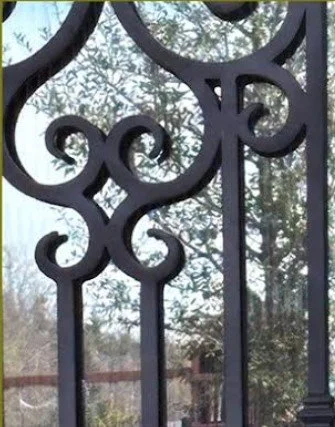
Things are not always as they appear. This photo posed an unsettling question. Was I standing outside the house looking in, or inside looking out? At first, it seemed obvious, but the longer I studied it, the less certain I became. I was standing outside the house, photographing a glass door that reflected the world behind me. What looked like a view from within was only a reflection.
Life can be much the same. Things are not always as they appear, and our first impressions are not always the truth. We are often confident in our conclusions, yet sometimes completely wrong. We trust our instincts, assumptions, and first impressions without knowing all the facts.
A story is told about Charles Spurgeon, pastor of the Metropolitan Tabernacle in London, and his wife. They raised chickens but never gave eggs away to their congregation; instead, they sold them. Some quietly criticized them, labeling them stingy and unkind. The Spurgeons never explained themselves or defended their actions. They simply allowed people to believe what they wished. Only after Mrs. Spurgeon passed away did the truth become known: the money from those eggs had been faithfully used to support two elderly widows in need. What appeared selfish was, in reality, deeply sacrificial.
This is not merely their story; it exposes how quickly we form judgments and how easily we settle into what “seems right” without carefully seeking truth. Proverbs 14:12 reminds us, “There is a way that seems right to a man, but its end is the way of death.” This proverb is more than gentle advice; it is a warning. It reminds us that sincerity is not the same as truth, and appearances can mislead us.
How often do we judge motives, misunderstand circumstances, or assume we see clearly when we are only looking at reflections? Ask the Lord for grace in how you see others, situations, and even yourself. When He reshapes our vision, we begin to see with humility, wisdom, and compassion. Invite Him to expose assumptions that have quietly taken root, so you may see more clearly. What once felt certain may be gently corrected by His truth, transformed by His love, and redirected by His gracious purpose.
–G. Yarian
Angels Are Present

Over three hundred times, Scripture quietly pulls back the curtain on a world we cannot see, yet one that is constantly at work around us. Psalm 34:7 assures us, "the angel of the Lord encamps around those who fear Him and delivers them." That word "encamps" paints a picture of protection that is not distant or occasional, but close, surrounding, and constant.
Throughout the Bible, angels appear in moments of need. An angel strengthened Jesus in the garden when His sorrow was overwhelming (Luke 22:43). An angel stood beside Paul in the storm, bringing reassurance in the darkness (Acts 27:23). Jesus even spoke of angels who watch over the “little ones, always in the presence of the Father” (Matthew 18:10). These are not isolated events, but glimpses into a greater unseen reality. Hebrews 1:14 calls angels “ministering spirits sent to serve those who will inherit salvation.” They are not objects of worship, but servants of God, carrying out His will on behalf of His people.
Invisible, they move quietly, unnoticed, protecting, strengthening, and delivering help according to God’s command. Because their work is unseen, we may never know how many dangers we have been spared, how many accidents could have been more severe, or how often we were guided away from harm. Yet Scripture reminds us that such care is real. This truth does not invite carelessness or presumption on our part. We are not to test God, as Satan tempted Jesus, but to walk wisely and humbly before Him. Divine protection is not permission for careless living, but an invitation to deeper trust.
With quiet peace, we walk forward, knowing we are never abandoned. God’s unseen servants surround us, strengthen us, and lovingly guard our path as we faithfully follow Him each day. Rest calmly in the assurance that nothing escapes His watchful eye, no burden is too small for His concern, and no moment ever falls beyond His sovereign, faithful, and unfailing care.
--G. Yarian
The Day the Wall Fell Down
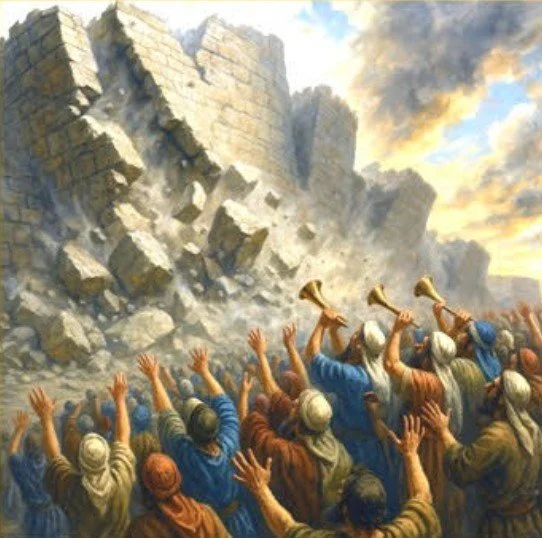
For Israel, who had been gently led through the wilderness by God’s faithful hand, Jericho now stood as their first great challenge in the land He had promised. Its towering walls must have seemed impossible to overcome. Yet God did not tell them to attack with swords or strength. Instead, He asked them to walk silently and faithfully around the city once a day for six days, and seven times on the seventh. Then, with one united shout of trust, they were to lift their voices in obedience and do exactly as He commanded. God did not call them to battle with might, but to walk by faith and trust His power.
Hebrews 11:30, “By faith the walls of Jericho fell, after the army had marched around them for seven days.” In the same way, we face walls that seem too strong to break, circumstances that feel beyond hope, and fears that rise before us like stone fortresses. In these moments, God gently reminds us that victory is not achieved by our might, but by His power. He does not ask us to figure everything out, but to trust Him enough to keep walking, one step of obedience at a time, even when the path seems impossible. As we walk, He works in ways we could never imagine, bringing down walls we thought would never fall.
Faith keeps going when the path seems impossible. It is faith that shouts praise before the victory comes, because it trusts the One who can bring the walls down. What walls are standing in front of you today? Bring them to God in prayer. Praise Him now as if those walls have already crumbled. Trust that the One who brought down Jericho’s walls will do the same for you, in His perfect time and in His perfect way.
—G. Yarian
Safe Within His Care
2 Samuel 22:31, “As for God, His way is perfect: the word of the Lord is proven; He is a buckler to all those who trust in Him.”
The image of a buckler may seem unfamiliar today, yet it carries a powerful truth. Unlike a large shield, a buckler was a small shield, portable, and used in close combat. It was not set aside or carried at a distance. It was held close, ready at any moment. It moved with the person, adjusting quickly to each threat. It was a personal shield and that is how Scripture describes God’s protection over those who trust Him.
God is not distant in that He is unaware of our struggles. He is near, even closer than the battles we face. His protection is not delayed or uncertain. It is immediate, personal, and perfectly timed. When the enemy sends what Scripture calls “fiery darts,” God provides a defense that meets them directly. His Word, proven and trustworthy, becomes our confidence and covering.
In today’s world, we might describe this buckler as the shield of faith. It is not something we merely hold in our hands, but something we carry within our hearts. Faith moves with us. It rises in moments of fear, steadies us in uncertainty, and guards our thoughts when doubt presses in. It reminds us that we are not alone in the battle.
There are times when the Lord allows challenges to come our way. Yet even then, He is never absent. He goes before us, preparing the way, and stands with us when the moment arrives. He strengthens us to endure and equips us to stand firm. Victory is not found in our strength, but in His presence. We walk forward, not unguarded, but protected. Not fearful, but trusting. The Lord Himself is our ever-present buckler, always near, ever faithful, and always sufficient for every battle we face.
–G. Yarian
Trust His Shield | It Really Works

Need a Yoke Adjustment?
The yoke invites us to picture one of the most comforting and yet deeply instructive images Jesus ever gave. He speaks of a yoke, an agrarian tool placed upon animals, not for decoration, but for direction, training, and shared labor. A yoke brings control, yes, but more importantly, it creates a connection. Two animals bound together learn to move as one, guided by the hand of the master. Jesus uses this picture to describe our relationship with Him.
Matthew 11:29 says, “Take my yoke upon you and learn from me, and you will find rest for your souls.” At first, this may seem like a contradiction. A yoke suggests effort, while rest suggests ease. Yet in Christ, the two are beautifully joined. To be yoked with Jesus is not to carry life alone. It is to walk beside Him, step by step, learning His pace, His direction, and His strength. He does not place a harsh or ill-fitting burden upon us. His yoke is kind, gentle, and perfectly fitted for our lives.
What weighs us down is not His yoke, but the burdens we try to carry without Him. Just as animals must be trained to wear a yoke, we too must learn; we learn through surrender, through trust, and through daily dependence. This yoke is not something we force upon ourselves, nor is it something we control. It is His yoke, placed upon us as we willingly come to Him.
Being yoked with Christ means yielding our will to His, allowing Him to guide our steps. It is faith in motion, walking where He leads, and trusting His wisdom over our own. And in our surrender, we discover something unexpected: rest, not from doing nothing, but from no longer striving and walking alone. His yoke does not confine us. It frees us to walk rightly, steadily, and securely with Him.
–G. Yarian
When yoked right, your burdens are lighter

No Bananas Today
When you walk into a grocery store, there are certain items you expect to find. You might assume milk or bread would top the list, but surprisingly, the most purchased item in grocery stores in America are bananas. Because of that, customers expect them to be there. If they are missing, something feels off. It may seem like a small thing and the customer would not care, but in reality, they may lose a customer.
In a similar way, the world carries expectations about those who follow Christ. When someone identifies themselves as a believer, others naturally look for certain conduct. Not perfection, but evidence. Not performance, but consistency. Scripture speaks clearly about this. In Galatians 5, Paul describes the fruit of the Spirit as love, joy, peace, patience, kindness, goodness, faithfulness, gentleness, and self-control. These are not optional traits. They are the natural outflow of a life connected to Christ. Jesus Himself said in John 13:35, “By this everyone will know that you are my disciples, if you love one another.”
The world expects love. It looks for integrity. It notices whether our words match our actions. It watches how we respond under pressure, how we treat others, and whether our faith shows up in everyday life. These expectations are not unreasonable, but they reflect what God is beginning to develop within us. So, stop and face this directly: am I actually living this way every day, or just pretending? You cannot fake this life or can you manufacture it with willpower alone. The Christian life demands surrender, not excuses. It requires abiding in Christ, not occasional effort.
Therefore, walk with Him in prayer, stay in His Word, yield your will, and He will produce what you cannot. The world expects evidence, and God alone grows real fruit. Stay near Him, and it will be noticed by others.
–G. Yarian
Faith is more than words

ENOUGH IS TRULY ENOUGH
Philippians 4:12: “I have learned to be content whatever the circumstances.” Contentment is not something we naturally possess; it is something we must learn. The Apostle Paul reminds us that whether in need or in plenty, whether well-fed or hungry, there is a steady place where the heart can rest. That place is not found in circumstances, but in trust.
In my backyard, there is a bird feeder that attracts a steady flow of birds. They come, take what is provided, and go on their way. Squirrels try to climb the pole and take food that was not meant for them. A simple plastic shield stopped them, yet they still circle below, wanting what they cannot have. We are not so different. We often long for and reach for things that are not given to us, or not given yet. We imagine a better situation, a fuller life, an easier path. When those desires go unmet, our hearts can grow restless. Like the psalmist in Psalm 10:1, “Why, LORD, do you stand far off? Why do you hide yourself in times of trouble?” We may even feel as though God is distant.
Yet contentment is not pretending everything is perfect. Contentment is trusting God when things are not. We may dream of an ocean cruise and find ourselves in a rowboat. We may picture ourselves living in a mansion on a hilltop and instead live quietly in a humble home in the valley. Life does not always match our expectations. But perhaps the greater question is not, “Why don’t I have what I want?” but “Can I trust God with what He has given to me?” Contentment does not require happiness for every moment. It requires confidence that God knows what is best. And as He reshapes our desires, we discover something deeper than happiness, a lasting joy that does not rise and fall with life.
—G. Yarian
WANT LESS, AND YOU WILL GAIN MORE

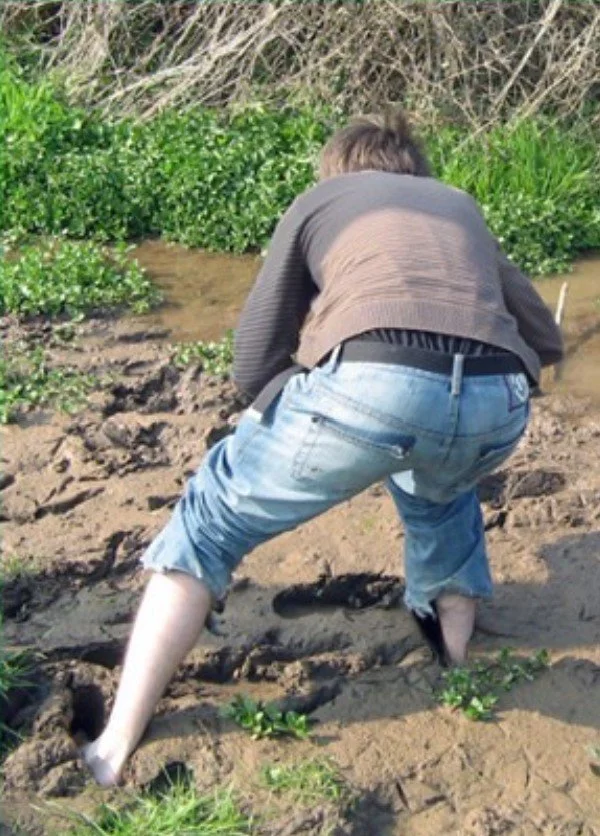
LIFTED FROM THE MUD, STRENGTH FOR EVERY STEP
There are moments in life when we feel stuck, like our feet are trapped in thick, slimy mud, unable to move forward. Our stride slows, and even simple steps feel extremely difficult. David wrote in Psalm 40, “He lifted me out of the slimy pit, out of the mud and mire.” This is more than poetry; it reflects real life, when burdens, grief, or uncertainty made it difficult for David to take the next step.
Often, we feel stuck and unable to move forward, not because we have failed, but because life has changed in ways we did not expect. Plans shift, relationships change, and the future feels unclear. We may hesitate, overthink, or quietly withdraw. It seems easier to remain where we are than to risk moving forward without clear direction.
Yet the Lord does not leave us there. He does not rush or pressure us. Instead, He meets us in our present struggle and begins to lead us forward, often no more than one small step at a time. These steps may feel insignificant, but they are not. God is not asking that we be perfect, only that we be willing to trust Him with what we cannot control.
Being lifted out is only the beginning. God does more than rescue; He restores. David says the Lord set his feet on a firm place to stand. That firm ground is not just relief; it becomes a place of renewed direction and steady footing. Then comes something deeply personal: “He put a new song in my mouth.” God does not erase our struggles, but He reshapes them. What once felt heavy begins to give way to quiet hope, then to gratitude and praise.
All of this flows from one response, trust. When we place our trust and confidence in Him, He turns our standstill into progress.
G. Yarian